Maha Shivaratri 2026: The Great Night of Shiva – Vedic Origins, Puranic Mysteries, and the Path to Moksha
As we traverse the sacred month of Magha in the Vikram Samvat 2082, the spiritual atmosphere is charged with the anticipation of the most potent night in the Hindu calendar. Today, Monday, January 26, 2026, being a *Somvar* (a day dedicated to Lord Shiva), serves as the perfect spiritual threshold to begin our preparations for the upcoming Maha Shivaratri, which will grace the earth on February 15, 2026.
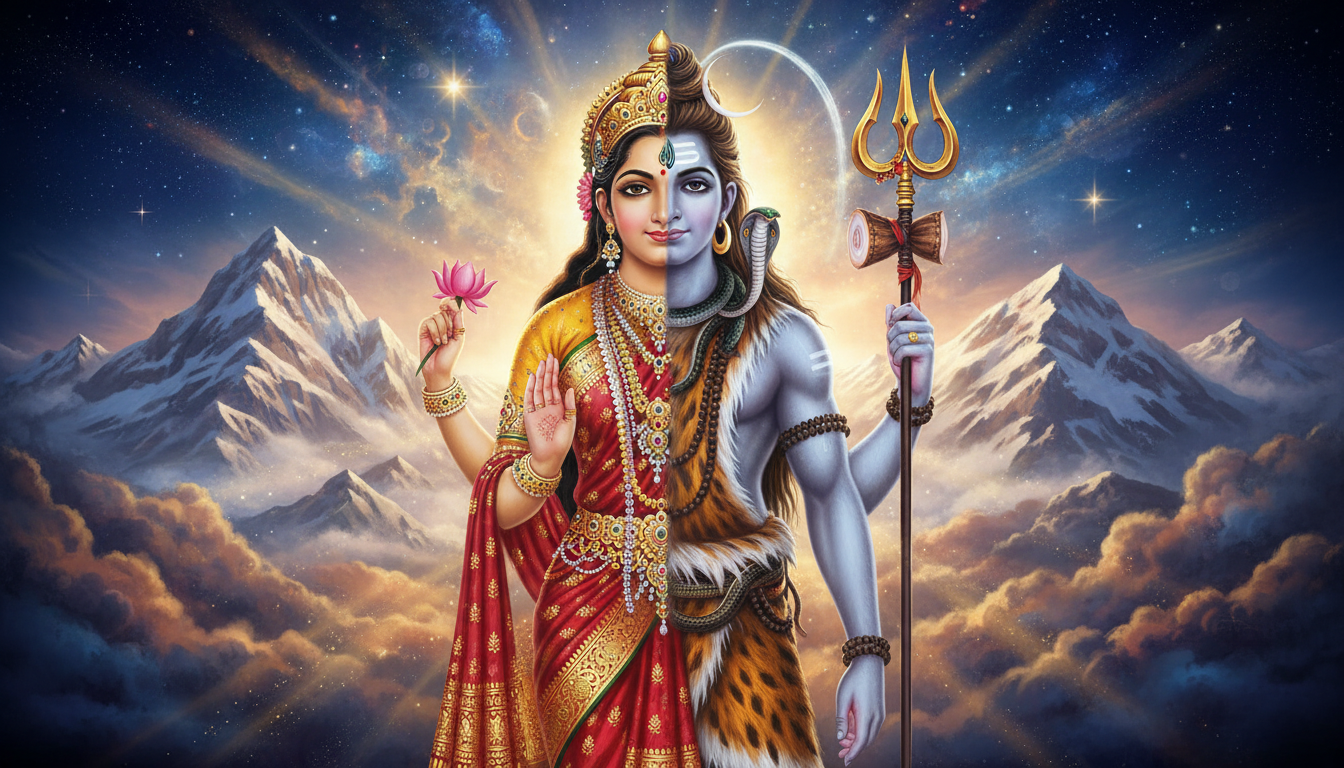
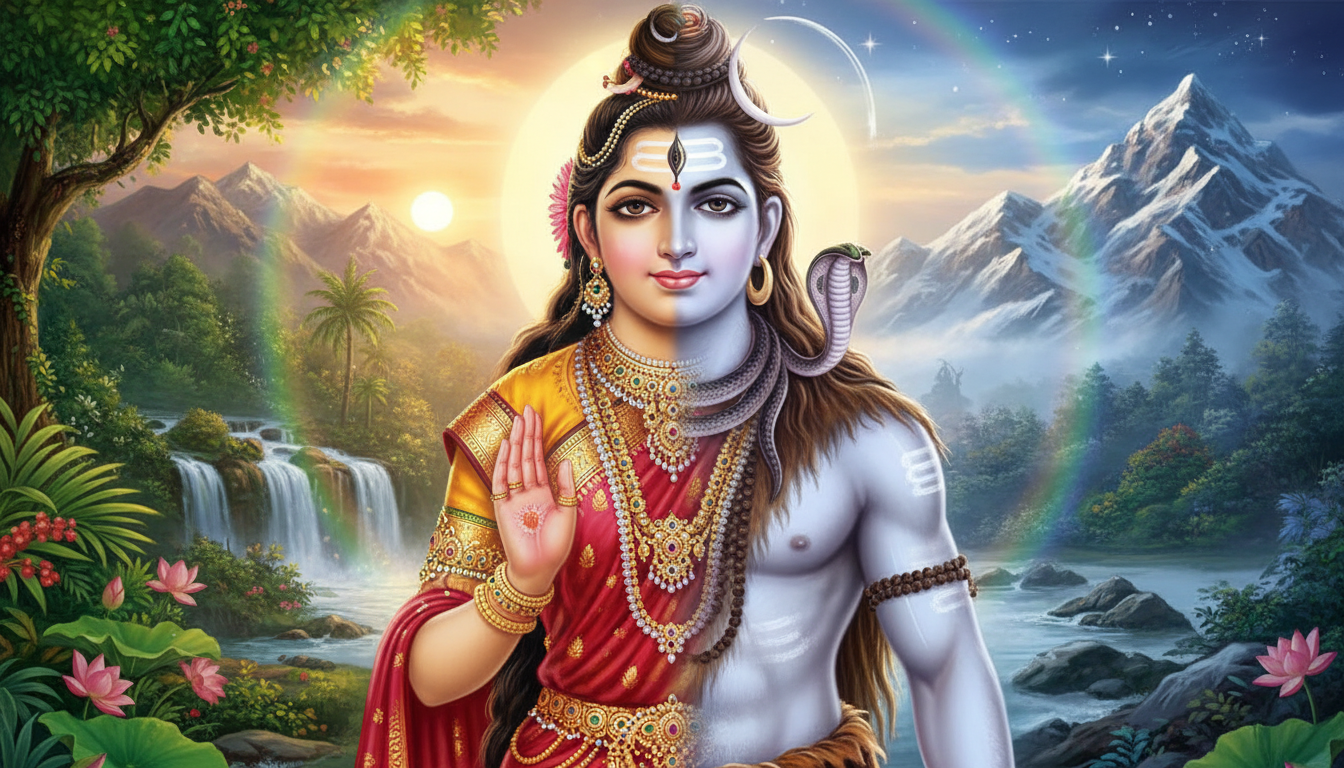
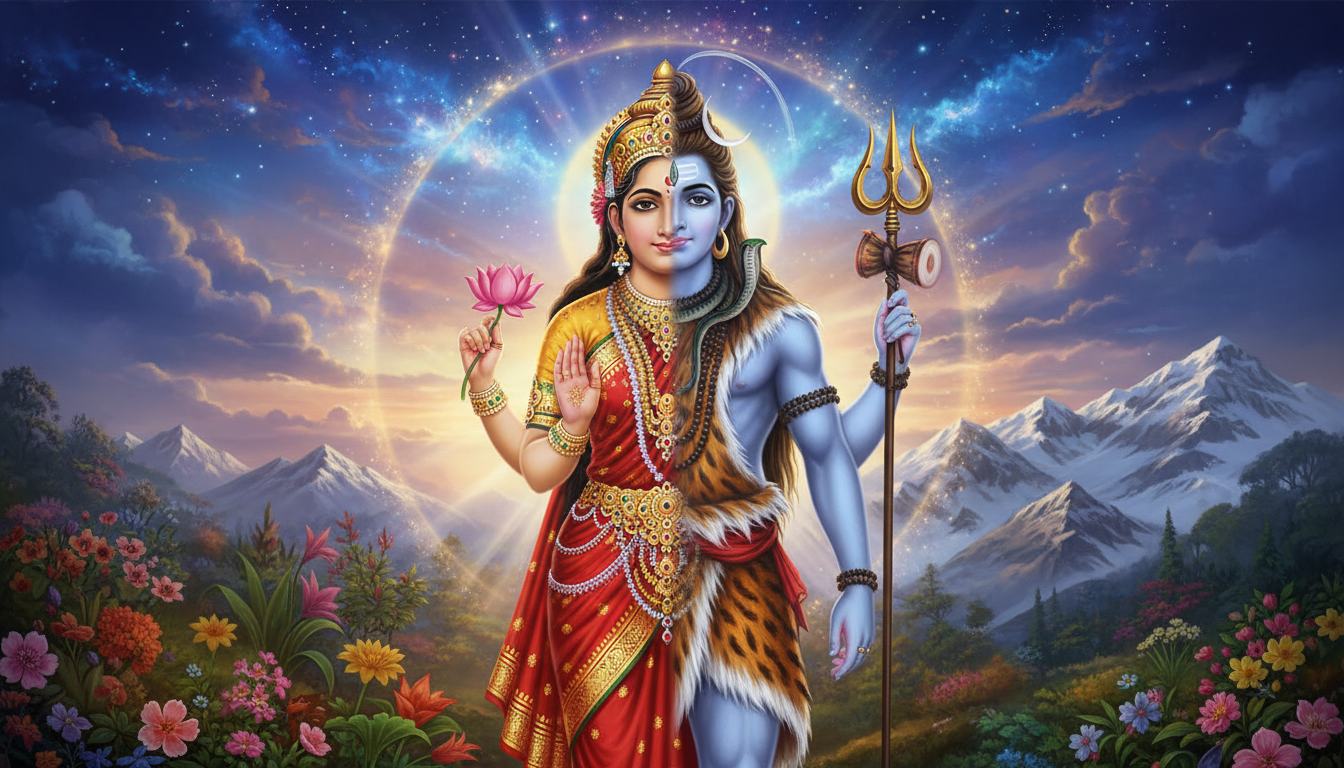
Maha Shivaratri is not merely a festival of rituals; it is a cosmic phenomenon. Unlike other festivals that celebrate the descent of grace or the victory of good over evil in a historical context, Maha Shivaratri celebrates the convergence of Shiva (Consciousness) and Shakti (Energy). It is the night when the northern hemisphere of the planet is positioned in such a way that there is a natural upsurge of energy in the human system.
For the seeker, this is not a night of entertainment, but a night of awakening. In this comprehensive treatise, we shall explore the Vedic roots, the profound Puranic legends, the esoteric symbolism, and the precise ritualistic guidelines to harness the immense possibilities of the Great Night of Shiva.
The Vedic Conception of Rudra: The Roar of the Cosmos
To understand Shiva, one must first look to the *Shruti* (Vedas). In the Rigveda, Shiva is propitiated as Rudra—the fierce, howling storm god who is also the benevolent healer. He is the one who weeps for the suffering of humanity and the one whose roar dissolves the illusion of the ego.
The Rigveda (2.33.1) addresses Him as the mightiest of the mighty:
**ā te pitar marutāṃ sumnam etu mā naḥ sūryasya saṃdṛśo yuyothāḥ |**
**abhi no vīro arvati kṣameta pra jāyemahi rudra prajābhiḥ ||**
*Translation: "O Father of the Maruts (Storms), let Your benevolence reach us! Do not cut us off from the sight of the Sun. May the Hero spare our horses; may we be prolific with offspring, O Rudra."*
However, the most definitive Vedic hymn dedicated to Lord Shiva is the Sri Rudram found in the *Krishna Yajurveda* (Taittiriya Samhita 4.5, 4.7). It is here that the transition from the fierce Rudra to the auspicious Shiva becomes evident. The hymn famously chants:
**Namah Shivaya cha Shivataraya cha**
*(Salutations to the Auspicious One, and to the One who is more Auspicious than all others.)*
This Vedic foundation establishes that Shiva is not merely a mythological deity but the personification of the Time-Space continuum (Mahakala) and the silence that precedes creation and succeeds dissolution.
Puranic Legends: Why We Keep Vigil
The *Puranas* (Smriti) provide the narrative framework that makes the abstract Vedic concepts accessible. While there are numerous legends associated with Maha Shivaratri, three stand out for their profound spiritual implications.
1. The Lingodbhava (The Column of Fire)
According to the Shiva Purana (Vidyeshwara Samhita), a dispute once arose between Lord Brahma (the Creator) and Lord Vishnu (the Preserver) regarding supremacy. To quell their ego, a limitless column of fire (*Jyotirlinga*) appeared between them, piercing the three worlds.
Upon failing to find its beginning or end, both gods realized the presence of a power beyond their comprehension. Lord Shiva then emerged from this column. This event occurred on the 14th night of the dark fortnight of Phalguna—Maha Shivaratri. Thus, worshipping the Shiva Linga on this night aligns one with the axis of the universe, the *Axis Mundi*, dissolving the finite ego into the infinite.
2. The Celestial Wedding (Shiva-Shakti Vivaha)
In the folk traditions and the *Skanda Purana*, this night celebrates the marriage of Shiva and Parvati. Shiva, the eternal ascetic (*Vairagi*), is drawn into worldly engagement (*Grihastha*) by Parvati (Prakriti). This union symbolizes the perfect balance between withdrawal and involvement, spirit and matter. For householders, this is the most significant aspect of the festival, promising marital bliss and harmony.
3. The Neelkantha (The Blue-Throated One)
During the *Samudra Manthan* (Churning of the Cosmic Ocean), a deadly poison named *Halahala* emerged, threatening to destroy existence. Shiva, out of infinite compassion, consumed the poison but held it in His throat, turning it blue. Maha Shivaratri is the night the Devas performed a vigil to keep Shiva awake and cool His burning throat. Spiritually, this teaches the devotee to stop the "poison" of negativity at the throat—neither swallowing it (internalizing trauma) nor spitting it out (hurting others with words).
The Spiritual Mechanics: Why Stay Awake?
Why is the vigil (*Jagaran*) mandatory on Maha Shivaratri?
The ancient Rishis were masters of astronomy and human physiology. On the night of Maha Shivaratri, the planetary positions creates a potent centrifugal force. In the human body, the spiritual energy, or *Kundalini Shakti*, which usually lies dormant at the base of the spine (*Muladhara Chakra*), finds it easier to rise upward toward the *Sahasrara Chakra* (Crown).
If one lies down horizontally, this natural upsurge is impeded. By keeping the spine vertical and remaining awake with focused awareness, a devotee cooperates with the cosmic forces. It is a night where the veil of *Maya* (illusion) is thinnest.
The Svetasvatara Upanishad (3.2) declares:
**eko hi rudro na dvitīyāya tasthur ya imāṃl lokān īśata īśanībhiḥ |**
**pratyaṅ janāṃs tiṣṭhati saṃcukopāntakāle saṃsṛjya viśvā bhuvanāni gopāḥ ||**
*Translation: "Rudra is truly one; for the knowers of Brahman do not admit the existence of a second, He alone rules all the worlds by His powers. He dwells as the inner Self of every living being."*
Ritual Vidhi: The Four Prahara Puja
For the serious aspirant, the worship on Maha Shivaratri 2026 should follow the Four Prahara system. The night is divided into four quarters (approx. 3 hours each), and specific Abhishekam (ritual bathing) is performed for the Shivalinga in each quarter.
First Prahara (Evening to roughly 9:00 PM)
Second Prahara (9:00 PM to Midnight)
Third Prahara (Midnight to 3:00 AM)
Fourth Prahara (3:00 AM to Sunrise)
Note: In every Prahara, the offering of Bilva Patra (Bel leaves) is non-negotiable. The three leaves of the Bilva represent the three eyes of Shiva, the three Gunas (Sattva, Rajas, Tamas), and the three weapons (creation, preservation, destruction).
As the Bilvashtakam states:
**Tridalam Trigunakaram Trinetram cha Triyayudham |**
**Trijanma Papa Samharam Eka Bilvam Shivarpanam ||**
*Translation: "I offer the Bilva leaf of three blades, the destroyer of sins committed in three births, the representation of the three Gunas and three eyes, to Lord Shiva."*
Modern Guidelines for Observing the Vrat (Fast)
In our modern, fast-paced life, observing the strictures of the Shastras can be challenging, but the benefits are immense for mental clarity and physical detoxification.
1. The Sankalpa (Vow): On the morning of Feb 15, 2026, after a bath, take water in your right palm and mentally resolve to observe the fast for self-purification and divine grace.
2. Dietary Rules:
* *Nirjala:* The most austere fast involves no food or water. Recommended only for healthy individuals.
* *Phalahar:* Consuming fruits and milk. This is suitable for most working professionals.
* Avoid grains, lentils, table salt (use rock salt/Sendha Namak), and heavy spices.
3. The Vigil: Engage in chanting "Om Namah Shivaya" or listening to the *Rudram* chant. Avoid watching movies or engaging in gossip. The goal is *Chitta Shuddhi* (purification of the mind).
4. Charity: The fast is incomplete without *Dana*. Donate food or clothes to the needy on the following morning (Parana).
Frequently Asked Questions (FAQ)
Q: Can unmarried women observe the Maha Shivaratri fast?
A: Absolutely. In fact, tradition holds that unmarried women fast to seek a husband with qualities like Lord Shiva—loyal, wise, and protective. It is believed that Goddess Parvati fasted to obtain Shiva as her consort.
Q: What if I cannot stay awake the entire night?
A: While the full vigil is ideal, if health or work does not permit, try to stay awake at least until midnight (the time of the Lingodbhava). The period from 11:30 PM to 12:30 AM is spiritually the most potent.
Q: Can we offer Tulsi leaves to Lord Shiva?
A: Generally, Tulsi is forbidden in Shiva worship (it is dear to Vishnu), just as Ketaki flowers are cursed. Stick to Bilva leaves, Dhatura, and white flowers like Jasmine or Mogra.
Q: I do not have a Shivalinga at home. How do I perform the Puja?
A: You can create a *Parthiv Linga* (made of clay/mud) which is considered highly meritorious. Alternatively, you can worship a mental image (*Manasa Puja*) of Lord Shiva. The sincerity of *Bhav* (emotion) supersedes the external ritual.
Q: What is the significance of drinking Thandai on this day?
A: While Thandai is often associated with Shiva as an offering of cooling herbs, the addition of *Bhang* (cannabis) is a cultural accretion, not a Vedic mandate. For a spiritual seeker, intoxicants cloud the awareness that the night tries to heighten. It is best to avoid intoxicants to maintain the sanctity of the fast.
Q: Is Maha Shivaratri determined by the day or the night?
A: Maha Shivaratri is observed on the day when the *Chaturdashi Tithi* (14th lunar day) prevails during the *Nishita Kaal* (midnight).
Conclusion: The dissolution of the Ego
As we look forward to February 15, 2026, let us use the current time to prepare our vessels. Lord Shiva is often called *Bholenath*—the Innocent Lord—because He is easily pleased. He does not ask for gold or jewels; He asks for your ego, your limitations, and your false identifications.
When you chant Om Namah Shivaya, you are not calling out to a man sitting on a mountain; you are invoking the element of dissolution within yourself. You are asking for the strength to destroy the old so that the new may be born.
May this Maha Shivaratri burn away the veil of ignorance and illuminate the *Jyotirlinga* within your own heart.
Join our spiritual family for daily Darshan, Vedic wisdom, and live streaming of the Maha Shivaratri Puja on YouTube. Subscribe now to stay connected with the Divine: [https://www.youtube.com/@BhaktiAmritSanatan?sub_confirmation=1]
Experience the Divine Nectar
Join our spiritual journey on YouTube. Daily Vedic insights, sacred Mantras, and profound scriptural commentary from the Vedas and Puranas.
SUBSCRIBE ON YOUTUBEShared with devotion via Bhakti Amrit Sanatan Divine Editor
शान्ति: शान्ति: शान्ति: