Life of Saints: The Path to Divine Awakening
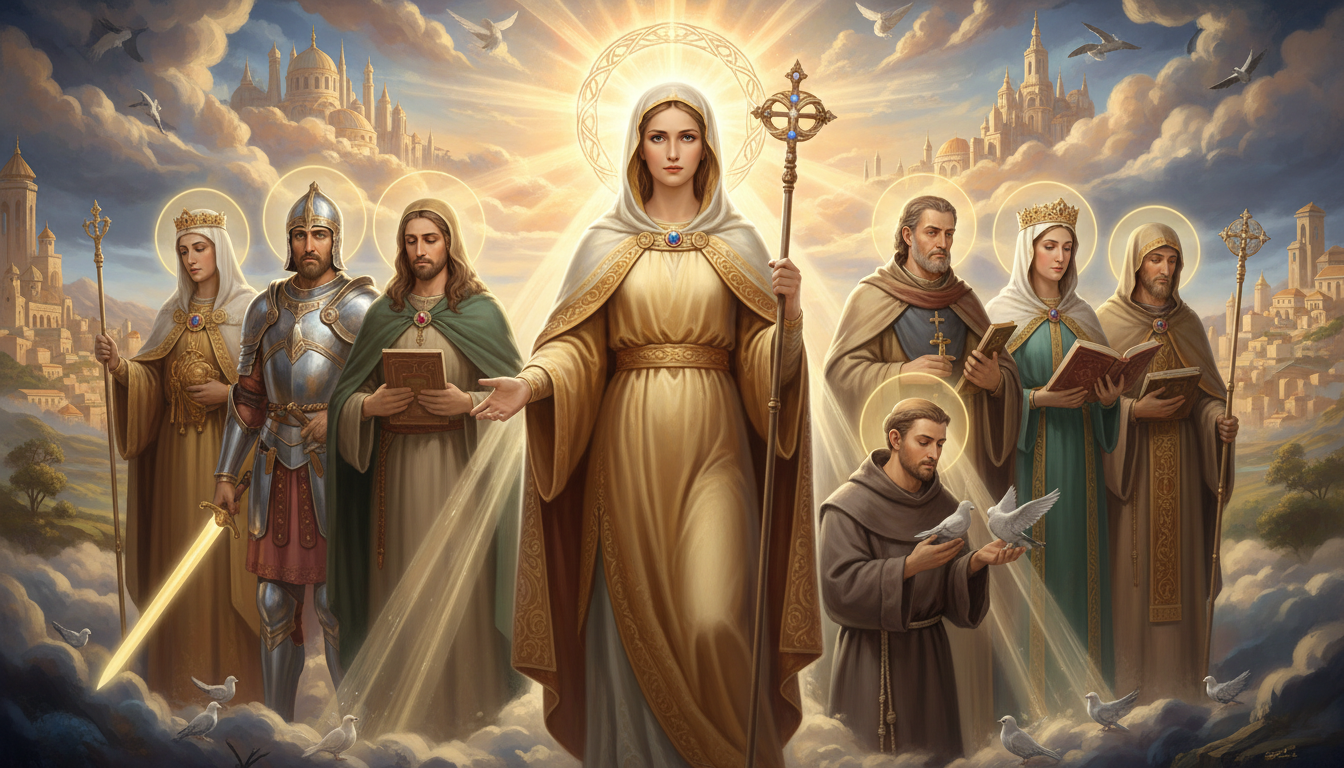
The Life of Saints is a testament to the highest potential of the human spirit, guiding humanity from darkness to light. Exploring the Life of Saints reveals that their existence is not merely a historical occurrence but a continuous, living tradition of divine grace. In the vast tapestry of Sanatan Dharma, these holy souls serve as the bridge between the mortal realm and the eternal abode of the Supreme.
To understand the Life of Saints is to understand the very essence of selfless love and renunciation. They walk the earth not for their own liberation, but to uplift fallen souls trapped in the cycle of birth and death. As we navigate the complexities of the modern world, their teachings remain the ultimate anchor.
Furthermore, the Life of Saints offers a practical blueprint for attaining peace. By observing their conduct, one learns that true happiness lies not in accumulation, but in distribution—the distribution of wisdom, compassion, and divine love. Therefore, studying their biographies is considered a form of *Sadhana* (spiritual practice) itself.
The Essence of Saintliness in Sanatan Dharma
In Vedic culture, a saint is not defined by robes or titles, but by the state of their consciousness. The scriptures describe a saint (Sant) as one whose heart is as soft as butter. While butter melts when heated, the heart of a saint melts at the suffering of others.
The *Bhagavad Gita* (Chapter 12, Verses 13-14) perfectly encapsulates the qualities that define the Life of Saints:
*Advesta sarva-bhutanam maitrah karuna eva ca*
*Nirmamo nirahankara sama-duhkha-sukha ksami*
Translation: "One who is not envious but is a kind friend to all living entities, who does not think himself a proprietor and is free from false ego, who is equal in both happiness and distress, and who is forgiving... such a devotee is very dear to Me."
This shloka highlights that the Life of Saints is characterized by an absence of malice and an abundance of compassion. They perceive the presence of the Divine in every being, from the smallest ant to the highest creator. Consequently, their interactions with the world are based on universal brotherhood and spiritual equality.
The Role of [Dharma](https://www.bhaktiamritsanatan.com/?s=Dharma) in a Saint's Life
Strict adherence to Dharma is the foundation upon which the Life of Saints is built. However, their understanding of Dharma transcends mere social duty; it elevates to *Sanatan Dharma*—the eternal duty of the soul to serve the Supreme.
For a saint, Dharma is not a set of rigid rules but a fluid expression of divine will. They demonstrate that the highest duty is to surrender to God. Whether it was Goswami Tulsidas rejecting worldly acclaim or Sant Tukaram immersing himself in the chant of Vitthala, their lives prove that righteousness is inherent in devotion.
The Life of Saints in Vedic Scriptures
The scriptures are replete with narratives that glorify the Life of Saints. The *Srimad Bhagavatam*, often called the "Ripe Fruit of Vedic Knowledge," is essentially a compilation of the lives of great devotees like Prahlada, Dhruva, and Ambarisha.
The Life of Saints in Vedic Scriptures teaches us that association with a holy person (*Sadhu Sanga*) is the most potent force in the universe. It is said that even a moment's association with a pure devotee can alter the destiny of a soul forever.
*Tulita nila-kantham sa na sthatum saknotīha*
*Kshanardhena api tulaye na svargam napunar-bhavam*
Translation: "The value of a moment’s association with a devotee of the Lord cannot be compared even to the attainment of heavenly planets or liberation from matter, and what to speak of worldly benedictions in the form of material prosperity."
This underscores that the Life of Saints is more valuable than liberation (*Moksha*) itself. Why? Because while liberation grants freedom from pain, the association of a saint grants the positive ecstasy of divine service.
Rishis vs. Saints: A Subtle Distinction
While often used interchangeably, there is a subtle distinction in the Vedic tradition. Rishis are the seers of truth, often living in seclusion to perform severe austerities. In contrast, the Life of Saints is often characterized by moving among the masses to preach.
Saints like Chaitanya Mahaprabhu or Ramanujacharya traveled extensively. They brought the high philosophy of the Vedas down to the level of the common man, making the divine accessible to all, regardless of caste or creed.
Characteristics of a True Saint
Identifying a genuine soul in the current age of Kali Yuga can be challenging. However, the Life of Saints always exhibits specific, non-negotiable characteristics:
1. Titiksha (Tolerance): They tolerate personal insults but cannot tolerate insults towards God or the scriptures.
2. Karuna (Compassion): Their primary motivation is the alleviation of others' suffering.
3. Samatvam (Equanimity): They remain balanced in praise and criticism.
4. Shastra-Chakshu (Scriptural Vision): They speak only in alignment with the Vedas and Shastras.
Moreover, a true saint never claims to be God. Instead, they present themselves as the humble servant of God. The Life of Saints is a demonstration of servitude, not lordship.
How the Life of Saints Inspires Modern Devotion
In the fast-paced world of 2026, stress and anxiety are prevalent. Here, the Life of Saints acts as a soothing balm. Modern psychology speaks of mindfulness; saints embody it effortlessly.
How the Life of Saints Inspires Modern Devotion is evident in the resurgence of *Bhakti* movements globally. People are realizing that material accumulation does not equate to inner contentment. The simplicity of a saint’s life challenges the modern narrative of consumerism.
When we read about Mirabai, who renounced a kingdom for Krishna, we are inspired to practice detachment. When we study the life of Swami Vivekananda, we are inspired to combine spirituality with social service. Thus, the Life of Saints is not archaic; it is deeply relevant and revolutionary.
The Power of [Bhakti](https://www.bhaktiamritsanatan.com/?s=Bhakti)
The core fuel for the Life of Saints is Bhakti. It is through single-pointed devotion that they transcend the limitations of the body and mind. Bhakti is not just emotion; it is a science of transforming the heart.
Saints demonstrate that Bhakti is the easiest path in Kali Yuga. While Jnana (knowledge) requires a sharp intellect and Yoga requires a strong body, Bhakti only requires a sincere heart. The Life of Saints proves that anyone, regardless of background, can attain the Supreme through love.
Spiritual Context: February 6, 2026
As we reflect on the Life of Saints on this auspicious Friday, February 6, 2026, we find ourselves in the sacred month of Magha (according to the Hindu lunar calendar). The month of Magha is historically dedicated to austerity and the worship of Vishnu and the Sun God.
During this time, millions of devotees and saints gather at the Triveni Sangam in Prayagraj for *Kalpavas*. A *Kalpavasi* vows to live the Life of Saints for one month—sleeping on the ground, eating once a day, and bathing in the holy Ganges.
This date serves as a reminder that we can all emulate the Life of Saints for a specific period to recharge our spiritual batteries. The planetary alignments in February 2026 favor introspection and the strengthening of one's resolve to follow the path of righteousness.
Examining the Lives of Great Mahatmas
To truly grasp the magnitude of the Life of Saints, we must look at specific examples that have illuminated the path of Sanatan Dharma.
Adi Shankaracharya: The Incarnation of Shiva
Shankaracharya’s life was a whirlwind of divine activity. In a short lifespan of 32 years, he traveled the length and breadth of India, re-establishing the authority of the Vedas. His life teaches us that knowledge and devotion are not contradictory but complementary.
Sant Tulsidas: The Power of the Name
The composer of the *Ramcharitmanas*, Tulsidas showed that the Life of Saints is one of perseverance. Despite facing opposition from orthodox scholars, he persisted in writing the Ramayana in the local dialect (Awadhi), making the story of Lord Rama accessible to the masses. His life proves that God appreciates sincerity over scholarship.
Meerabai: The Icon of Surrender
Meerabai’s Life of Saints was one of total rebellion against societal norms for the sake of divine love. She faced poison and persecution with a smile, protected by her beloved Giridhar Gopal. Her life is the ultimate example of *Atma-Nivedanam* (total surrender).
The Transformative Power of Satsang
The Vedas declare: *Satsangatve Nissangatvam* (From attachment to good company comes detachment from illusion). The Life of Saints is the source of this Satsang.
When we associate with saints, their vibrations cleanse our consciousness. It is said that the words emanating from the lotus mouth of a saint carry the potency to cut the knots of worldly attachment. Therefore, seekers are advised to seek out the Life of Saints and serve them with humility.
However, if physical association is not possible, associating with their teachings (Vani) is equally potent. Reading their biographies, listening to their discourses, and meditating on their sacrifices allows us to tap into the energy of the Life of Saints.
Challenges in the Life of Saints
It is crucial to understand that the Life of Saints is rarely a bed of roses. History shows that great souls have often faced immense persecution. Jesus Christ, Socrates, Haridas Thakur, and Prahlada Maharaja all faced extreme opposition.
Why does this happen? Because the Life of Saints challenges the status quo of the material world. Their purity exposes the impurities of society. Yet, their response to persecution is what makes them saints. They respond not with anger, but with prayer for the deliverance of their tormentors. This radical forgiveness is the hallmark of the Life of Saints.
Conclusion: Walking the Path
In conclusion, the Life of Saints is the beacon of hope in a world often shrouded in despair. They are the living verification of the scriptures. Without them, the Vedas would be mere books; through them, the Vedas breathe and speak.
To honor the Life of Saints, we must do more than worship them; we must emulate them. We must strive to cultivate a fraction of their tolerance, a drop of their compassion, and a spark of their devotion.
As we move forward through 2026, let us resolve to make the Life of Saints our guiding star. By doing so, we not only purify our own existence but also contribute to the spiritual upliftment of the entire world.
FAQ: The Life of Saints
Q: Why is the Life of Saints considered important in spirituality?
A: The Life of Saints provides a practical example of how to live according to divine laws. They bridge the gap between theoretical scriptural knowledge and practical daily living, showing us that liberation is possible.
Q: How can I recognize a true saint in today's world?
A: A true saint exhibits humility, lack of greed, and constant remembrance of God. The Life of Saints is defined by consistency between their words and actions. They never seek personal glory but always point towards the Divine.
Q: Does reading about the Life of Saints count as spiritual practice?
A: Yes. Reading their biographies is a form of *Sravanam* (hearing about the Lord and His devotees). It purifies the mind and instills a desire for spiritual growth, making it a potent aspect of the Life of Saints.
Q: What is the significance of the month of Magha regarding saints?
A: The month of Magha (occurring around Jan-Feb) is traditionally associated with austerity and the gathering of saints at holy rivers (Magha Mela). It is a time when the Life of Saints is celebrated through holy dips and alms-giving.