Festival Spotlight: Cosmic Night of Maha Shivratri and Phalguna Sanctity
Focus Keyword: Festival Spotlight
Festival Spotlight: Unveiling the Cosmic Night of Maha Shivratri and Phalguna Sanctity
As we stand on the threshold of one of the most potent spiritual periods in the Vedic calendar, today, Friday, February 6, 2026, marks a significant phase in the Festival Spotlight. We are currently navigating the sacred currents of the Phalguna month, specifically moving through the Krishna Paksha (the waning phase of the moon). The atmosphere in the spiritual realm is thickening with anticipation, for we are rapidly approaching the "Great Night of Shiva"—Maha Shivratri. This is not merely a cultural observation but a cosmic alignment that offers the Jiva (individual soul) a unique gravitational assist toward spiritual liberation.
In this Festival Spotlight, we turn our gaze toward the impending arrival of Maha Shivratri, the crown jewel of Shaivite festivals. While monthly Shivratris occur every lunar month on the Chaturdashi Tithi, the Maha Shivratri falling in the month of Phalguna possesses a unique vibratory quality. The planetary positions in the Northern Hemisphere during this time naturally push energy upwards, making it the ideal window for spiritual seekers to dissolve their limited identities into the infinite ocean of Shiva Tattva.
To understand the magnitude of the upcoming days, we must delve deep into the Shastras, exploring why the ancient Rishis marked this specific time as the pinnacle of spiritual sadhana. This article will serve as your comprehensive guide to understanding the theology, ritual, and consciousness required to fully harness the energy of the approaching Maha Shivratri.
The Significance of Phalguna Krishna Paksha: The Descent into Holiness
In the vast tapestry of the Hindu Panchang, time is not linear; it is cyclical and qualitative. We are currently in the month of Phalguna. According to the *Skanda Purana*, the month of Phalguna is the concluding month of the Hindu lunar year, representing the dissolution of the old to make way for the new (Chaitra).
The Krishna Paksha (waning moon) of Phalguna is traditionally associated with the reduction of the ego. Just as the moon's light diminishes night by night, the seeker is encouraged to diminish their identification with the material body. This phase is a preparatory period for the absolute darkness of Amavasya, which is preceded by the Chaturdashi—the night of Shiva.
The *Shiva Purana* states that Lord Shiva is *Kala-atita* (beyond time) and *Mahakala* (the Great Time). Worshipping Him during the Phalguna Krishna Paksha helps the devotee transcend the fear of time and death. As we move from February 6th toward the mid-month, the energies support introspection, detachment (Vairagya), and deep meditation (Dhyana).
The Scriptural Basis of Maha Shivratri: Why We Celebrate
The upcoming festival is grounded in three major Puranic narratives, each offering a different facet of the Divine Truth.
1. The Lingodbhava (The Emergence of the Infinite Column)
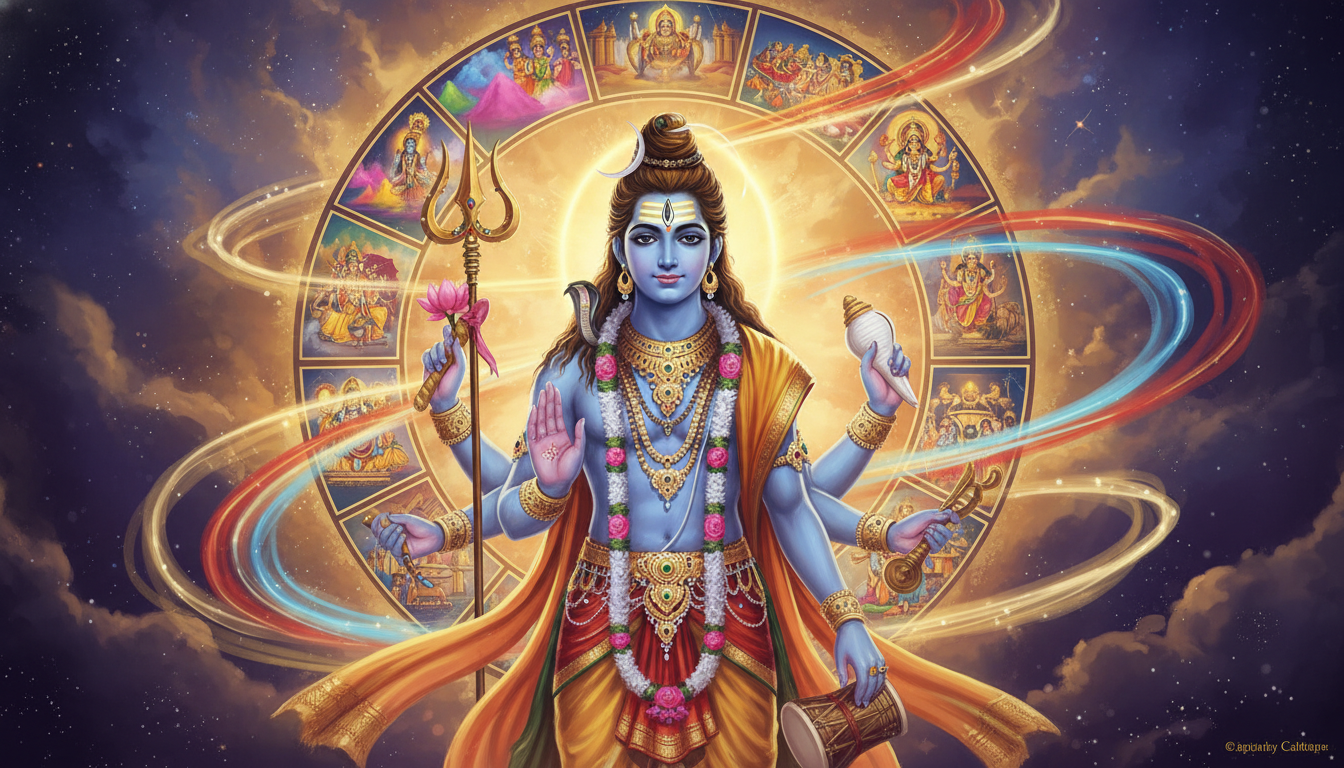
The *Vidyeshwara Samhita* of the *Shiva Purana* describes the primary origin of Maha Shivratri. It was on this night that Lord Shiva manifested as a beginning-less and endless pillar of light (Jyotirlinga) to quell the dispute of supremacy between Lord Brahma and Lord Vishnu.
**Sanskrit Shloka:**
*“Na bhūmir na jalaṁ chaiva na vahnir na ca mārutaḥ |*
*Na cākāśam na buddhisca na pradhāno na pūruṣaḥ ||”*
>
**Translation:**
"There was neither earth, nor water, nor fire, nor wind, nor ether. There was neither intellect, nor primordial matter, nor the cosmic person. (Only the Shiva Tattva existed)."
This event signifies that Shiva is the Formless Brahman manifesting as Form for the sake of the devotee. Celebrating this night is acknowledging the source of all creation.
2. The Divine Union (Shiva-Shakti Vivaha)
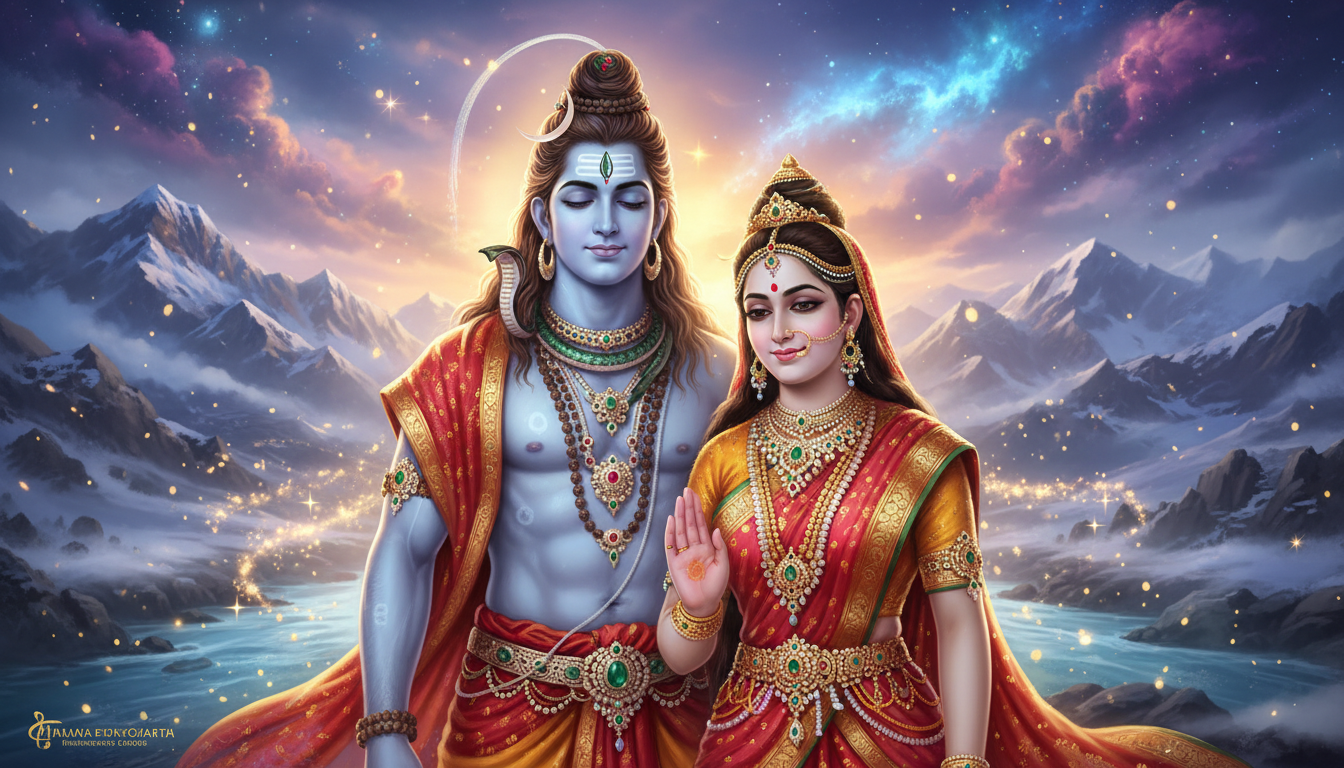
In the folk traditions and the *Rudra Samhita*, this night celebrates the wedding of Lord Shiva and Goddess Parvati. This is the union of Purusha (Consciousness) and Prakriti (Nature). Spiritually, this represents the union of the Kundalini Shakti (resting in the Muladhara) with the Shiva consciousness (in the Sahasrara Chakra).
3. The Neelkantha (The Blue-Throated One)
During the *Samudra Manthan* (Churning of the Ocean), a deadly poison (Halahala) emerged. To save the cosmos, Shiva consumed it, holding it in his throat. This act of supreme compassion is commemorated on this night.
The Science of Upavasa (Fasting) and Jagran (Vigil)
As we prepare for the festival later this month, understanding the mechanics of fasting is crucial. In Sanatana Dharma, *Upavasa* does not merely mean 'starving'. *Upa* means 'near' and *Vasa* means 'to stay'. Thus, Upavasa means 'staying near the Divine'.
The physiological basis for fasting on Shivratri is profound. The planetary positions during this time render the human system more receptive to energy. A stomach full of food requires significant energy for digestion, drawing blood and prana to the digestive tract. By fasting, this energy is liberated and can be directed upward toward the brain and higher chakras.
The Importance of Jagran
Keeping awake vertically (with the spine erect) throughout the night of Maha Shivratri is a specific prescription found in the *Lingapurana*.
**Sanskrit Shloka:**
*“Rātrau jāgaraṇaṁ kuryāt śivadhyānaparāyaṇaḥ |*
*Pūjayet liṅgam īśasya sarvapāpap praṇāśanam ||”*
>
**Translation:**
"One should keep a vigil at night, wholly intent on the meditation of Shiva. One should worship the Linga of the Lord, which destroys all sins."
When the spine is erect during this night, the natural upsurge of energy in the Northern Hemisphere facilitates the movement of Kundalini. Lying down obstructs this flow. Therefore, the Jagran is a yogic technique disguised as a ritual.
The Four Prahara Puja: A Tantric and Vedic Breakdown
For the upcoming festival, the night is divided into four *Praharas* (watches), each lasting approximately three hours. The *Shiva Agama* Shastras prescribe specific modes of worship for each Prahara, representing the purification of different aspects of the self.
First Prahara (Evening to Night)
- ☸ **Abhishekam Material:** Milk (Dugdha).
- ☸ **Significance:** Milk represents *Sattva Guna* and nourishment. It purifies the physical body (Sthula Sharira).
- ☸ **Mantra:** *Om Hrim Ishanaya Namah*.
Second Prahara (Night to Midnight)
- ☸ **Abhishekam Material:** Curd (Dahi).
- ☸ **Significance:** Curd represents the transformation of milk, symbolizing the maturity of the mind. It is offered for the prosperity of progeny and stability.
- ☸ **Mantra:** *Om Hrim Aghoraya Namah*.
Third Prahara (Midnight to Early Morning)
- ☸ **Abhishekam Material:** Ghee (Clarified Butter).
- ☸ **Significance:** Ghee represents the essence of life and the fire of wisdom. This is the most potent time (Nishita Kaal) for dissolving past karmas.
- ☸ **Mantra:** *Om Hrim Vamadevaya Namah*.
Fourth Prahara (Early Morning to Sunrise - Brahma Muhurta)
- ☸ **Abhishekam Material:** Honey (Madhu).
- ☸ **Significance:** Honey represents sweetness and the bliss of liberation (Ananda). It marks the final surrender of the ego.
- ☸ **Mantra:** *Om Hrim Sadyojataya Namah*.
Bilva Patra: The Leaf that Pleases Mahadeva
No discussion in a Festival Spotlight on Shiva is complete without the *Bilva Patra*. The *Bilvashtakam* extols the virtues of offering this trifoliate leaf.
**Sanskrit Shloka:**
*“Tridalaṃ triguṇākāraṃ trinetraṃ ca triyāyudham |*
*Trijanmapāpasaṃhāraṃ ekabilvaṃ śivārpaṇam ||”*
>
**Translation:**
"I offer that one Bilva leaf to Lord Shiva, which has three leaves, which represents the three Gunas (Sattva, Rajas, Tamas), the three eyes of Shiva, and the three weapons, and which destroys the sins of three births."
Botanically, the Bilva tree (*Aegle marmelos*) possesses an aura that resonates with the frequency of the Shiva Tattva. Placing a Bilva leaf on the Shiva Linga establishes a connection between the devotee's consciousness and the deity. It signifies the surrender of the three states of consciousness: *Jagrat* (waking), *Swapna* (dreaming), and *Sushupti* (deep sleep), leaving only the *Turiya* (transcendental state).
Preparing the Soul: From Feb 6th to the Great Night
Since we are currently at February 6, 2026, we have a window of opportunity to prepare our vessel (body and mind) for the influx of energy. Sudden fasting or intense meditation without preparation can be jarring. Here is a recommended sadhana schedule based on the *Dharma Sindhu*:
1. Dietary Adjustment: Begin shifting to a 'Sattvic' diet today. Reduce heavy spices, onions, garlic, and non-vegetarian food. This lightens the cellular structure.
2. Mantra Japa: Start a daily routine of chanting the *Panchakshari Mantra* ("Om Namah Shivaya") 108 times at twilight (Sandhya).
3. Mental Purification: Practice *Ahimsa* (non-violence) in thought, word, and deed. Shiva is *Ashutosh* (easily pleased), but He is also the observer of the heart's intent.
4. Dana (Charity): In the Krishna Paksha of Phalguna, giving to the needy helps balance karmic debts before the great night of absolution.
The Shiva Tattva: Non-Dualistic Philosophy
While the rituals are vital, the ultimate goal of the Festival Spotlight is *Jnana* (Wisdom). Adi Shankaracharya, the great proponent of Advaita Vedanta, encapsulated the essence of Shiva in the *Nirvana Shatakam*.
**Sanskrit Shloka:**
*“Mano buddhyahaṅkāra cittāni nāhaṁ*
*Na ca śrotrajihve na ca ghrāṇanetre |*
*Na ca vyoma bhūmir na tejo na vāyuḥ*
*Cidānandarūpaḥ śivo'ham śivo'ham ||”*
>
**Translation:**
"I am not the mind, the intellect, the ego, or the memory. I am not the ears, the tongue, the nose, or the eyes. I am not the space, the earth, the fire, or the wind. I am the form of consciousness and bliss. I am Shiva! I am Shiva!"
This festival is a reminder that Shiva is not a person sitting on Mount Kailash alone; He is the very substrate of existence. We are not separate from Him. The rituals are tools to peel away the layers of ignorance (Avidya) so that we may realize our own divinity.
Professional FAQ: Navigating the Festival
Q: What is the exact distinction between Shivratri and Maha Shivratri?
A: Shivratri occurs every lunar month on the 14th day (Chaturdashi) of the Krishna Paksha. Maha Shivratri occurs only once a year, specifically in the month of Phalguna (or Magha in some calendars, referring to the same lunar event), just before the arrival of Spring. It is the most spiritually potent of all Shivratris.
Q: Can women perform the Abhishekam of the Shiva Linga?
A: Yes. In Vedic times and according to the *Shiva Purana*, devotion is not restricted by gender. Women can perform Abhishekam. The restriction is often a later societal imposition or related to specific temple customs, but scripturally, pure devotion (Bhakti) is the only qualification required.
Q: What if I cannot fast completely due to health reasons?
A: The Shastras are compassionate. If *Nirjala* (waterless) or full fasting is not possible, one may consume fruits and milk (*Phalahara*). If that is also difficult due to medical conditions, a light Sattvic meal is permitted. The emphasis is on the mental focus (*Bhava*) rather than physical torture.
Q: Why is the Rudraksha bead significant during this festival?
A: Rudraksha means "The Tears of Rudra (Shiva)." Legend says Shiva meditated for aeons for the welfare of all creatures, and when He opened His eyes, tears fell, becoming Rudraksha trees. Wearing Rudraksha assists in maintaining a cocoon of energy, shielding the wearer from negative influences and stabilizing the heartbeat for meditation.
Q: What is the specific timing for the Nishita Kaal Puja in 2026?
A: While exact timings depend on your geographical location (latitude/longitude), the *Nishita Kaal* is generally the eighth muhurta of the night (around midnight). For the specific date in 2026, consult a local Drik Panchang closer to the festival date, but generally, the midnight window is the most auspicious for the main puja.
Conclusion
As we conclude this Festival Spotlight, remember that the days following February 6, 2026, are a divine invitation. The cosmos is aligning to lift you up. Whether you are a householder seeking prosperity or a renunciate seeking liberation, the approaching Maha Shivratri holds the key.
Do not let this time pass in mundane distractions. Use the sanctity of the Phalguna month to cleanse your mind, body, and spirit. Prepare your Abhishekam, gather your Bilva leaves, but most importantly, gather your intent. When the Great Night arrives, be ready to merge with the infinite silence of Shiva.
*Om Namah Shivaya.*
Join our spiritual family for daily Darshan and Vedic wisdom on YouTube. [https://www.youtube.com/@BhaktiAmritSanatan?sub_confirmation=1]
Experience the Divine Nectar
Join our spiritual journey on YouTube. Daily Vedic insights, sacred Mantras, and profound scriptural commentary from the Vedas and Puranas.
SUBSCRIBE ON YOUTUBEShared with devotion via Bhakti Amrit Sanatan Divine Editor
शान्ति: शान्ति: शान्ति: